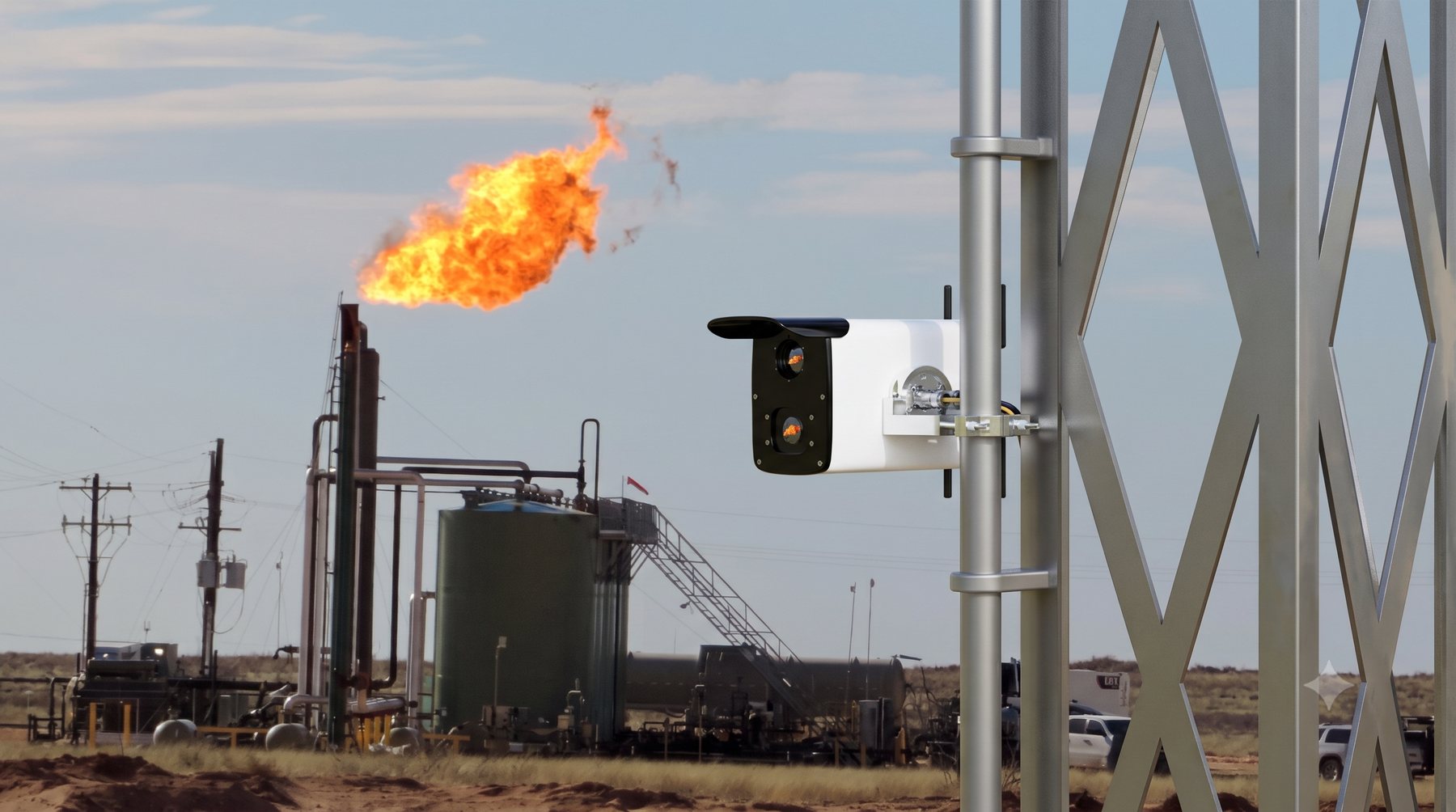
The visible and the invisible, from the exact same angle. The Alta camera locks an OGI sensor and an optical camera to the same pan, tilt, and zoom, so the flame you can see and the gas you can't line up in one frame, at the same moment.
A thermocouple can't be trusted to tell you the pilot is out. Flare Intelligence gives every flare a real-time status instead, lit or out, smoking or clean, with video on every event. Step up to Flare Intelligence Plus on our Alta camera and it also watches the pilot and flags a cold-vent condition the moment it starts. The compliance record for Method 22, OOOOb, and your state's rules comes with it.
Get the flare monitoring overview — what the unit watches, and how it maps to Method 22, OOOOb, and your state's flare rules. No pitch, just a scoping conversation.
Check your inbox — the flare monitoring overview is on its way. We'll also reach out about a quick scoping conversation for your sites.
By the time someone drives by and notices a dead pilot, unburned gas is already venting.
A real-time status for every flare, built on two cameras that check each other, so you get the alerts that matter and not the ones that don't.
When a flare goes out, the system checks the pilot in real time. No pilot and no flame means a cold-vent risk, and you hear about it before gas is sent to a dead flare, not after.
The Alta camera locks an OGI sensor and an optical camera to the same pan, tilt, and zoom. The visible flame and the invisible gas come from the exact same angle at the exact same moment. Only Alta does this.
The model reads both cameras before it flags you. Methane is invisible to the optical camera, so if the optical can see the plume, it's steam or dust, and the alert gets dropped. Far fewer false alarms, the thing that makes teams tune camera systems out.
On any optical camera, Flare Intelligence reads flame status and smoke by color, white, gray, black, brown, around the clock. Every event ships with annotated and raw video plus a keyframe you can open in the browser.
Built to live on a pole in the field, not in a server room. A sealed enclosure, an optical and an infrared lens behind one weather hood, and a single connector panel — nothing on site to babysit.
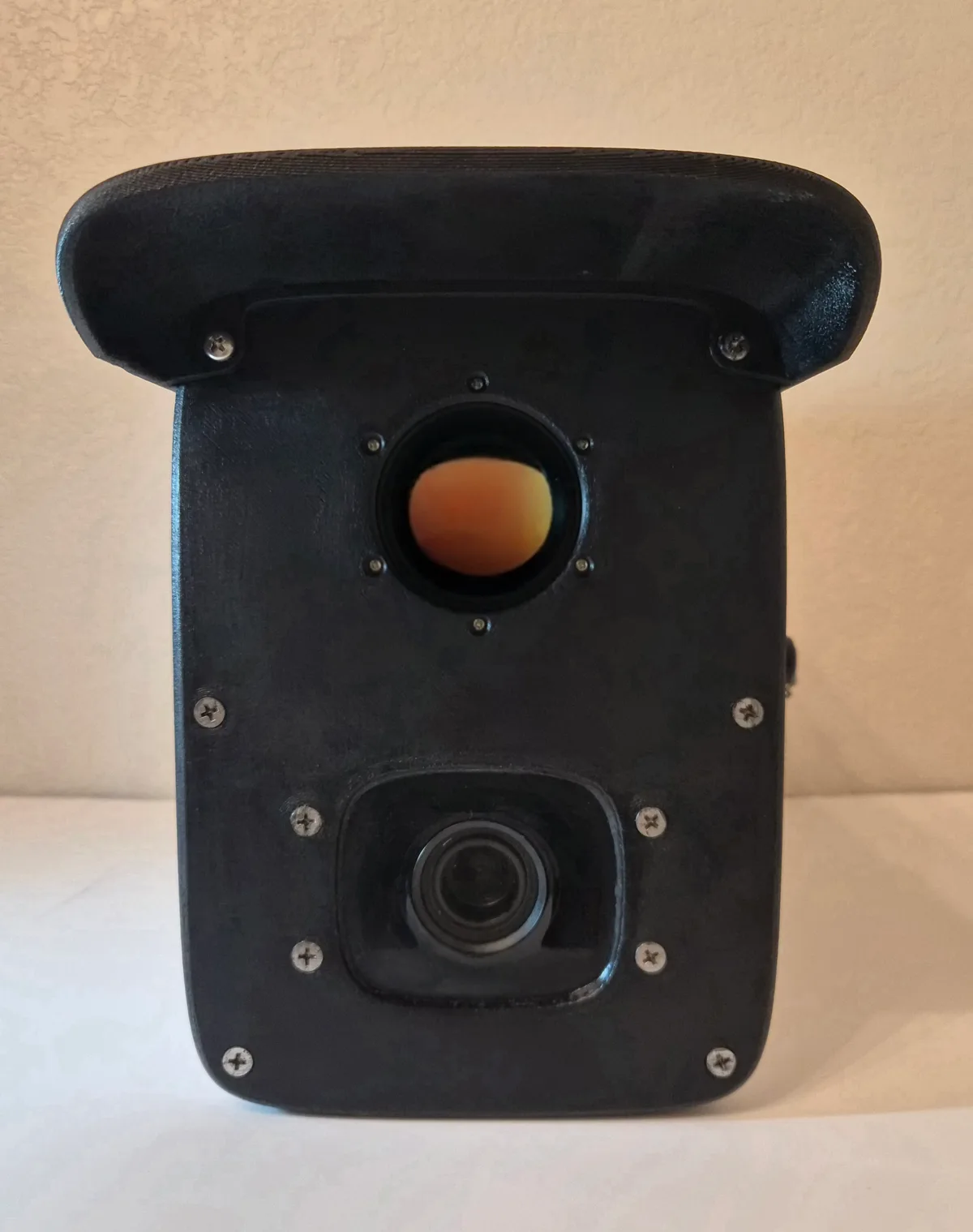
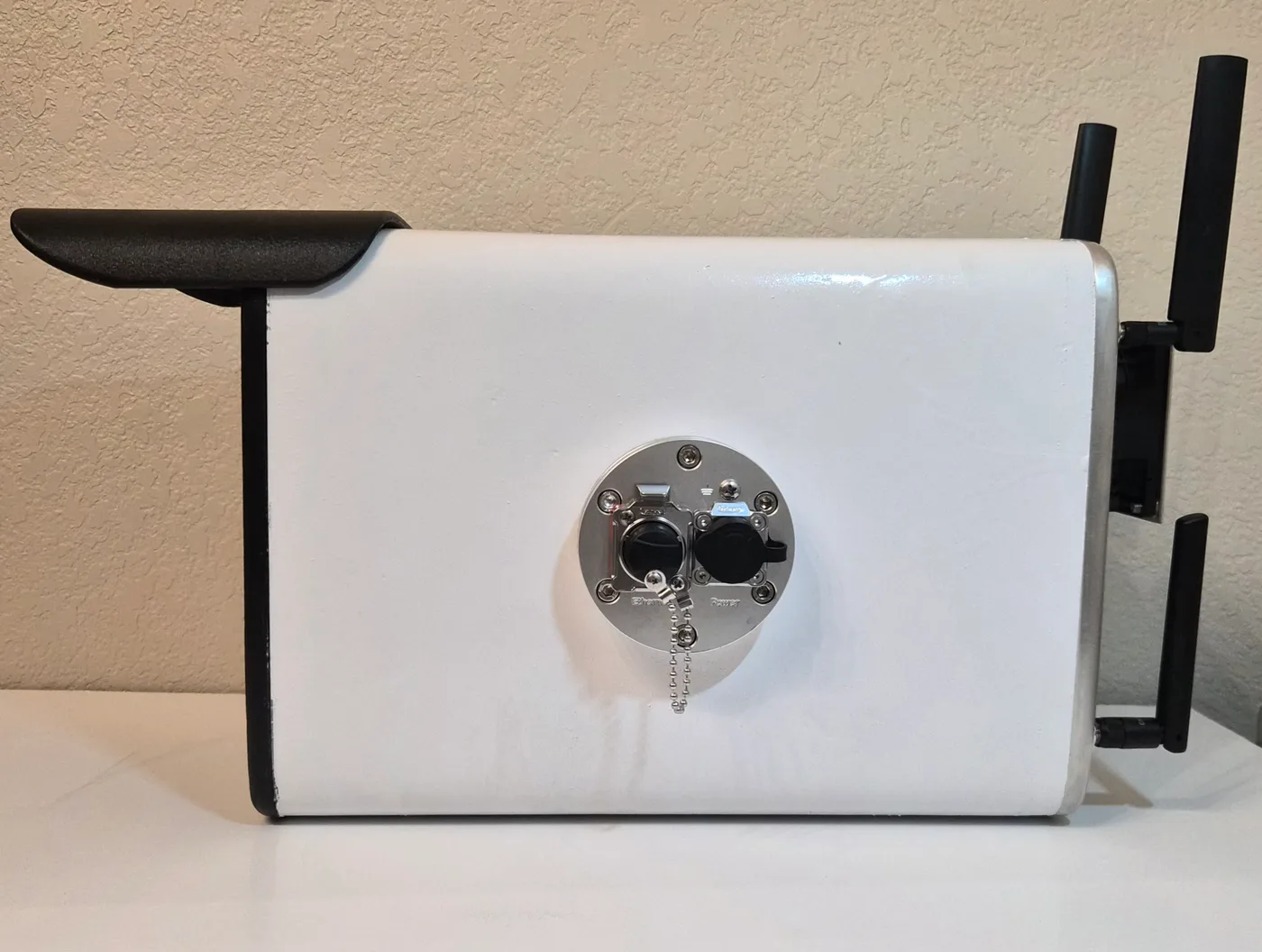
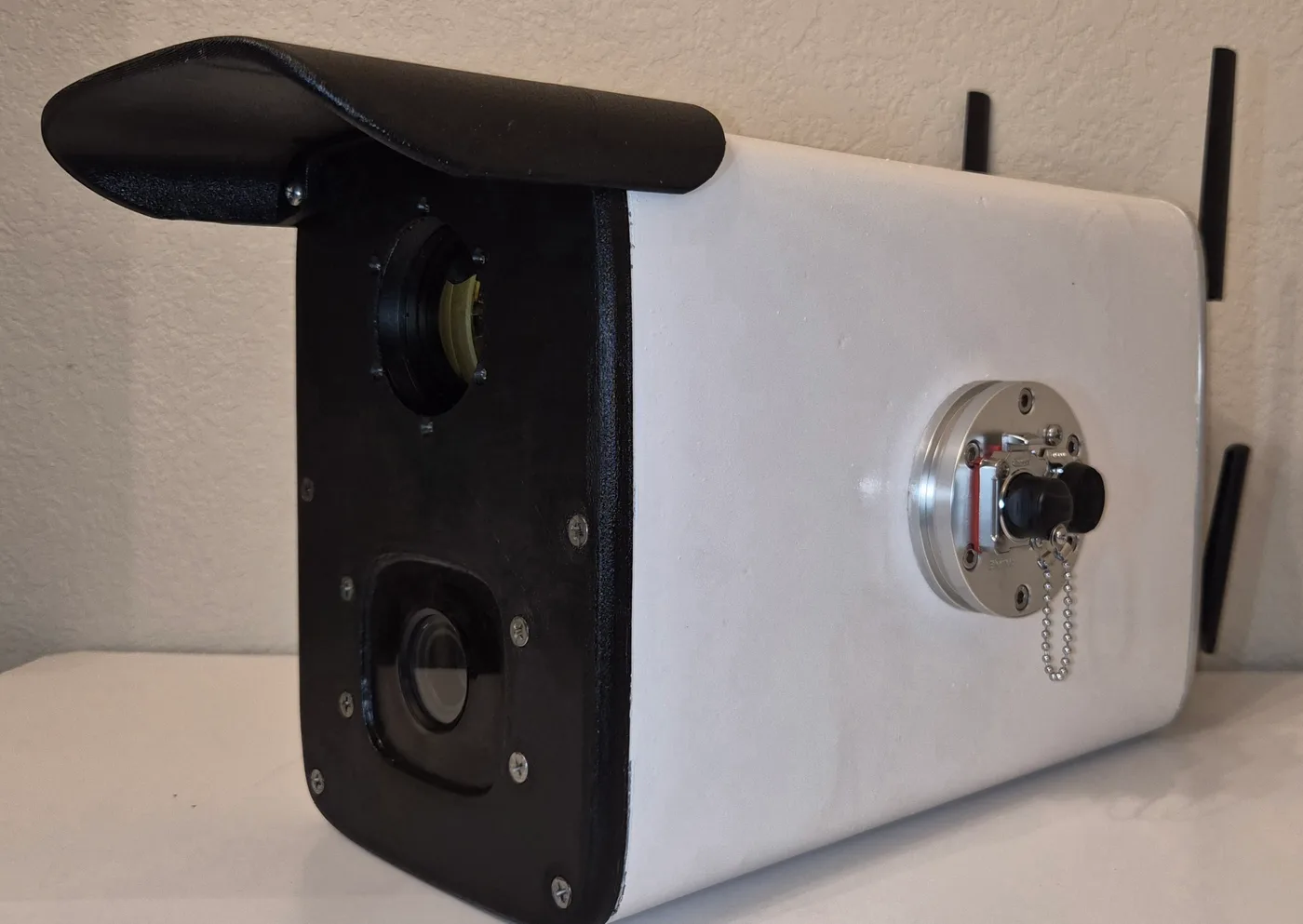
Every event is granular, time-stamped data you can actually use. Trend a flare's behavior over time, compare equipment and manufacturers across your sites, and get to root cause, with the compliance record built in.
Flare Intelligence runs on an optical camera. Flare Intelligence Plus runs on our Alta camera, which locks an OGI sensor to the optical view for pilot and cold-vent monitoring. We'll scope which tier fits your sites in a short conversation.
Alta gives your team the continuous visual evidence these programs rely on; it supports your compliance workflow and does not replace your regulatory determinations. We'll map exactly which requirements apply to your sites in the scoping conversation.
The camera mounts on a pole with a clear line to the flare. An optical camera for lit/out and smoke, stepping up to our Alta camera with infrared on Plus, no one on site and no new sensors on the stack.
Around the clock, it reads flame status and watches for visible emissions, and on Plus it also reads the pilot and surfaces unburned gas venting — all from the same position.
A compliance-ready visual record you can hand to a regulator, plus a real-time alert the moment a flare goes out, starts smoking, or starts venting unburned gas.
Detection performance is an evolving capability shown here for illustration, and every event is backed by the footage so your team can verify any call for themselves. We'll walk through coverage and camera placement for your specific sites in the scoping conversation.
See what the unit watches and how it maps to your compliance obligations. It starts with a short scoping conversation.
See it on your flares